
APEX Racer - Pixel Cars
PIXELDEV GAMESRacing
4.32.15K Reviews
- Version
- 0.9.59
- Installs
- 1.00M
- Age Rating
- Everyone
Screenshots



Our Review of APEX Racer - Pixel Cars
 Analysis by Appyee
I tend to enjoy racing games most when they give me a reason to return beyond shaving a fraction off a lap, and APEX Racer - Pixel Cars has a useful hook for that: the car itself becomes part of the project. Its pixel-art presentation gives the racing a distinct retro character, while tuning and visual changes invite you to build a ride that feels like yours. That mix makes it appealing if you want more than a quick, anonymous sprint, though it also means the game suits patient tinkering better than players who only want instant, realistic driving.
A practical way to settle in
My preferred approach is to treat the first sessions as a baseline rather than rushing to perfect a car. Get comfortable with the controls, pay attention to how your chosen car behaves, and make one adjustment at a time. When several parts or settings change together, it becomes hard to tell which choice actually helped. A small, repeatable routine—race, notice where the car feels awkward, change one thing, then try again—makes customization more useful and less like guesswork.
That process also helps answer a common question: is this approachable if you are new to racing games? The controls are described as intuitive, and the straightforward race-and-progress premise gives newcomers a clear place to start. There is still room to refine your driving, so I would not expect every event to feel effortless straight away. If you are used to racing games, the appeal is less about learning an elaborate control scheme and more about figuring out how your build and driving choices work together.
What to check before you commit to a build
The garage is a major part of the game, but I would avoid treating every available tweak as an automatic upgrade. A change that sounds better on paper may alter the feel of a car in a way that does not suit your habits. I get more value from deciding what I want the car to do, then testing changes against that goal. For example, if a run feels difficult to control, chasing raw speed may not solve the problem; consistency is often the more useful target.
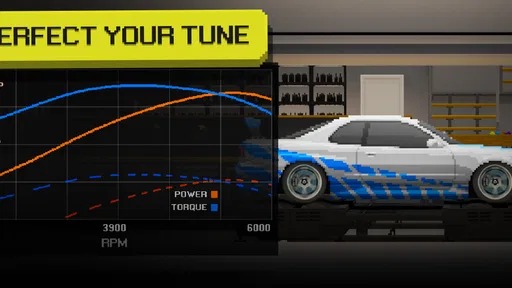
Visual customization has a different purpose. Paint and style choices let you make a car recognizably yours, while mechanical tuning is where I would focus when trying to improve performance. Keeping those two goals separate makes the garage easier to use: first make the car look right, then work through handling or speed changes without losing track of what you changed. That distinction is especially handy when you like experimenting but do not want to rebuild your setup from scratch after every race.
Build a repeatable racing rhythm
For a short play session, I would pick one car and use a few races to learn its responses rather than hopping between builds. Familiarity gives you a better reference point: you can tell whether a result came from cleaner driving or a setup change. When a track feels unfamiliar, focus on completing a controlled run before judging the car. It is a simple habit, but it helps separate a driving mistake from a setup issue.
The different track settings also give the game some variety, from neon-lit city scenes to mountain routes. I would not assume that a car that feels comfortable in one environment will feel equally natural everywhere. Treating each change of scenery as a fresh test keeps the racing from becoming automatic and gives you a reason to revisit your choices. This is a more rewarding loop for players who enjoy learning than for someone looking for a quick sequence of identical races.
Where its appeal has limits
Compared with the usual mobile racing alternatives, this game leans more heavily on pixel presentation and garage tinkering than on realistic visuals. That is a strength if you like retro art and want a personal build to work on; it is a poor fit if lifelike cars, elaborate simulation, or a purely pick-up-and-play arcade rush matters most to you. The customization can also ask for patience. Players who dislike testing adjustments or repeating races may find the tuning side more effort than fun.
There is competitive play, which can make a familiar car feel different once another person is pushing the pace. I would use multiplayer as a way to test composure and decision-making, not as the only measure of whether a build is good. A loss does not automatically mean the setup is wrong; an unfamiliar track or a rushed run can matter too. If you prefer to learn at your own pace, spend time with solo racing before making competitive matches your main routine.
Who will enjoy the garage-and-race loop
I think the game is strongest for players who like pixel art, enjoy tuning a favorite car, and find satisfaction in gradual improvement. It also works well for someone who wants a mobile racing game that can be approached in short sessions: a few runs can give you a clear question to work on next time. A realistic everyday use case would be playing during a break, choosing one small adjustment to test, and leaving the next session with a better feel for whether it helped.
I would steer away from it if you want a detailed real-world driving simulator or a racing game where every session is about immediate spectacle rather than building familiarity. It is also worth thinking about spending before you start. The game is free to play, with optional in-app purchases priced from $0.99 to $14.99 per item. You can decide whether the core loop is enjoyable before paying, and I would only consider a purchase if it supports a style of play you already know you like.
Get Ready to Race!
The moment you fire up APEX Racer - Pixel Cars, you're greeted with a splash of vibrant colors and nostalgic graphics that instantly transport you back to the golden age of gaming. The pixelated art style isn’t just a gimmick; it’s a charming homage to the classic games many of us grew up with. And let me tell you, it’s done beautifully!
The gameplay kicks off with a simple premise: race your heart out and climb the leaderboards. But don't let that simplicity fool you. The game offers a surprisingly deep and engaging racing experience. The controls are intuitive, making it easy for newcomers to jump right in while providing enough nuance for seasoned racers to hone their skills.
Customization Galore
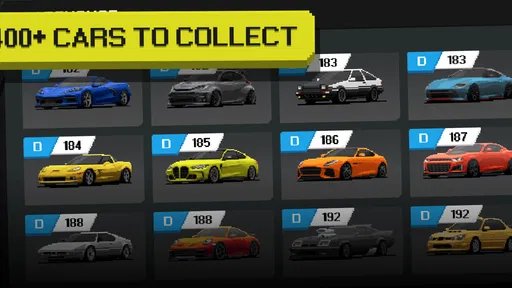
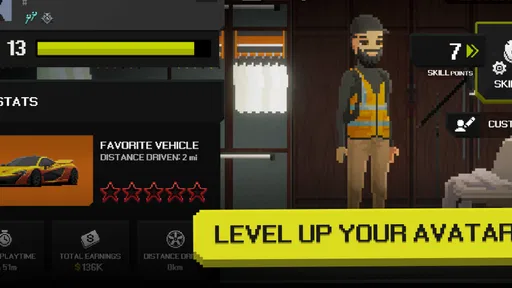
What really sets this game apart is the level of customization available. You can tweak and tune your pixel car to perfection, adjusting everything from the engine to the paint job. The garage is packed with options that allow you to tailor your ride to your personal style, and that’s a big part of the fun. Plus, the sense of pride you feel when your creation zooms past the competition is incredibly satisfying.
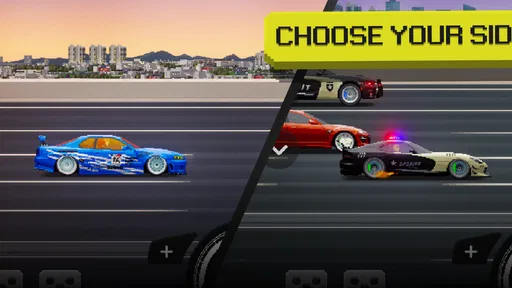
And let's not forget the variety of tracks you’ll be racing on. Each one comes with its own unique challenges and aesthetics, keeping the gameplay fresh and exciting. Whether it's zipping through neon-lit cityscapes or navigating treacherous mountain trails, there’s always something new to discover.
Multiplayer Mayhem
One of the highlights of APEX Racer is its multiplayer mode. Competing against friends or random players from around the world adds a thrilling layer of excitement. The stakes feel higher, and every victory is a sweet reminder of your racing prowess. It's not just about speed; strategy plays a crucial role, and outsmarting your opponents becomes as important as outpacing them.
The game’s matchmaking system is pretty solid, ensuring you’re paired with racers of similar skill levels. This keeps things competitive without being frustrating, which is a huge plus in my book.
Soundtrack and Sound Effects
Now, let’s talk about the audio. The soundtrack is a catchy mix of retro tunes that perfectly complement the pixelated visuals. It’s upbeat and energizing, keeping you pumped up through every race. The sound effects, from the revving engines to the screech of tires, add an extra layer of immersion that makes each race feel thrillingly real.
Final Thoughts
Overall, APEX Racer - Pixel Cars is a delightful throwback to classic gaming with a modern twist. Its combination of pixel art, engaging gameplay, and extensive customization options make it a standout in the mobile gaming arena. Whether you’re looking to kill some time or dive deep into competitive racing, this game has something for everyone.
So, if you haven’t already, I highly recommend giving it a download. It’s a joy to play, and who knows? You might just find yourself hooked, racing through pixelated tracks long into the night. Happy racing!
Why the numbers matter in context
PIXELDEV GAMES develops this racing game, which has an average rating of 4.6 from around 32,000 ratings, with roughly 2,000 written reviews and more than a million installs. I take that as a sign that it has found an audience, not as proof that every feature will suit every driver. The strongest reason to try it is the combination of retro presentation and car-building; the broad install base is useful context, but your enjoyment will depend on whether that loop clicks for you.
It is free, rated for Everyone, and its current version is 0.9.51. The game was released on April 5, 2023, and requires Android 8.0 or later. That makes it worth checking your device’s system version before downloading, particularly if you keep an older phone as a backup. The age rating also makes the presentation suitable for a broad audience, though parents should still consider how optional purchases fit their household rules.
Small habits that make experimentation clearer
A helpful way to avoid confused tuning is to keep a mental note of the last change and the result, rather than making several garage edits between races. You do not need a complicated spreadsheet: even remembering “this felt steadier, but slower” gives the next session direction. If the change appears to help on one kind of track but not another, that is useful information too. The goal is not to find a universally perfect car, but to understand the trade-off you are accepting.
I would also resist changing a car just because a race went badly. First ask whether you were learning the course, driving consistently, or testing a setup you had not yet understood. Repeating a familiar run can be more informative than immediately swapping parts. This habit is especially valuable in a game where customization is a central attraction: it turns the garage into a place for deliberate decisions rather than a menu of upgrades to tap through.
Choosing between solo practice and competition
Multiplayer is an appealing change of pace, but solo runs have a practical role: they let you establish what your car does without the pressure of reacting to other racers. Once a setup feels predictable, competition becomes a better test of how well you can use it. I would alternate these modes based on what I want from a session—practice when I am trying to learn, then multiplayer when I want an unpredictable challenge.
That distinction can also prevent frustration. If you enter a match mainly to validate a new build, a close result may tell you little about whether the change helped. If you enter because you want a contest, the uncertainty is part of the appeal. For me, keeping those goals separate makes the game feel fairer, even when a race does not go my way.
A sensible way to decide whether it is for you
Before spending money, I would play long enough to find out whether both halves of the experience appeal to me: racing itself and spending time in the garage. Someone who enjoys only the actual competition may prefer a more direct arcade racer with less tinkering, while someone who wants simulation-level handling may be happier with a dedicated driving sim. This game sits between those expectations, with stylized cars, accessible controls, and customization as a meaningful part of the routine.
My verdict is that it is easiest to recommend to a patient, curious player who enjoys making small adjustments and seeing how they affect a run. It is less convincing for anyone who expects realism or instant mastery. If you approach it as a pixel-art racer to learn over time, rather than a shortcut to perfect lap times, the balance of garage work and competition has a better chance of keeping you engaged.
Verdict
Strengths of APEX Racer - Pixel Cars
- Vivid pixel art graphics enhance nostalgia.
- Responsive controls for smooth gameplay.
- Wide variety of cars to customize.
- Frequent updates with new content.
- Leaderboards add competitive edge.
Limitations of APEX Racer - Pixel Cars
- In-app purchases can be pricey.
- Occasional lag on older devices.
- Limited tracks might feel repetitive.
- Ads can interrupt gameplay.
- Requires constant internet connection.
Similar Picks in This Category
View All
Hill Climb Racing
Fingersoft4.3

Dr. Driving
SUD Inc.4.2

Traffic Rider
skgames4.5

Asphalt 8 - Car Racing Game
Gameloft SE4.6

Race Master 3D: Car Racing
Beresnev Games4.6

Extreme Car Driving Simulator
AxesInMotion Racing4.3
Frequently Asked Questions
What are the main features of APEX Racer - Pixel Cars?
APEX Racer - Pixel Cars offers a unique blend of retro pixel art graphics with modern racing mechanics. Players can customize their cars extensively, participate in various race events, and compete with friends in multiplayer mode. The game also features a dynamic weather system and a variety of tracks to keep the gameplay fresh and exciting.
Is APEX Racer - Pixel Cars free to play?
Yes, APEX Racer - Pixel Cars is free to download and play on both Android and iOS platforms. However, it does offer in-app purchases that allow players to buy cosmetic items, upgrade parts, and unlock additional content. These purchases are optional and are not necessary to enjoy the full experience of the game.
What type of devices are compatible with APEX Racer - Pixel Cars?
APEX Racer - Pixel Cars is compatible with most modern Android and iOS devices. It requires at least Android 5.0 or iOS 11 for optimal performance. It’s recommended to have a device with at least 2GB of RAM and a stable internet connection to ensure the game runs smoothly, especially during multiplayer races.
How can I customize my car in APEX Racer - Pixel Cars?
In APEX Racer - Pixel Cars, car customization is one of the key features. Players can modify various aspects including the car's paint job, decals, wheels, and performance parts such as the engine and suspension. This allows for a highly personalized racing experience, where players can tailor their cars to match their racing style and preferences.
Is there a multiplayer mode in APEX Racer - Pixel Cars?
Yes, APEX Racer - Pixel Cars features a robust multiplayer mode. Players can race against friends or other players worldwide in real-time. The multiplayer mode includes leaderboards and seasonal events, encouraging competitive play and offering rewards for top performers. This adds an engaging social component to the game, enhancing the overall experience.
Play our best games!


